
My Town : Hospital
My Town Games LtdEducational
4.2203.00 Reviews
- Version
- 7.03.09
- Installs
- 100.00K
- Age Rating
- Everyone
Screenshots
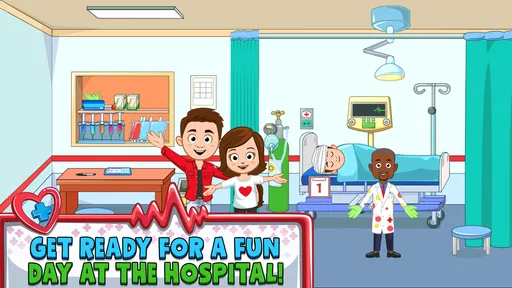
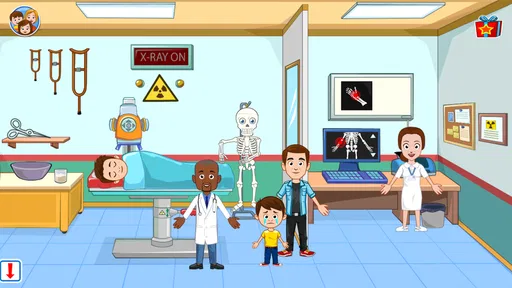
Our Review of My Town : Hospital
 Analysis by Appyee
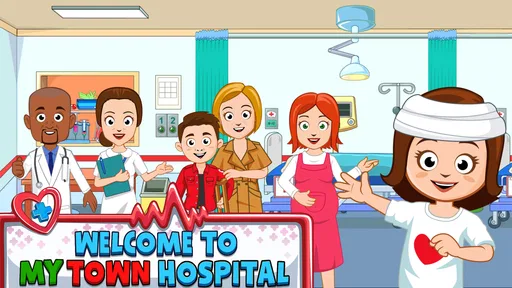
I spent time with My Town : Hospital as a child-friendly educational game, and my first impression was that it is less about winning than about making sense of a familiar place through play. The hospital setting gives children an easy starting point: rooms suggest different activities, characters create small stories, and everyday medical ideas become something they can explore at their own pace. It is made by My Town Games Ltd and is aimed at Everyone, so the tone is intentionally approachable rather than dramatic.
That distinction matters. This is not a medical learning tool in the formal sense, and I would not choose it for lessons that require accurate explanations of anatomy, diagnosis, or treatment. I see it more as imaginative role-play with an educational edge. A child can act as a doctor, patient, visitor, or helper and build a simple narrative around what happens in a hospital. For younger players, that can make an unfamiliar environment feel less intimidating.
How the hospital setting works in everyday play
The strongest part of the game is the way it turns a collection of hospital rooms and characters into an open-ended play space. Instead of pushing me through a fixed sequence, it encourages me to decide what the scene is about. I can begin with a patient arriving, move through an examination, and then change the story completely by having another character visit or help. That freedom is useful for children who enjoy inventing dialogue and situations more than following instructions.
I found the setting especially suitable for short sessions. A child does not need to understand a complicated objective before starting. Pick a character, explore a room, and interact with the scene. That low barrier makes it a reasonable choice for a quiet activity while travelling, waiting for an appointment, or winding down before bed. The lack of pressure also means a child can stop and return later without feeling that progress has been lost.
One practical use I noticed is preparing a child for a real hospital visit. A parent could play alongside them and use the rooms as prompts: What might happen when someone arrives? Why might a person need help? Who works in this place? The game should not replace a calm conversation with an adult, but it can give that conversation a concrete setting. This is one of its more valuable uses, and it is easy to miss if you only view it as a casual children’s game.
It also works well for shared play between an adult and a child. Rather than taking over, I would let the child choose the story and ask occasional questions. “What does this character need?” or “Who could help next?” keeps the activity interactive without turning it into a quiz. That approach makes the educational value come from language, empathy, sequencing, and pretend decision-making rather than from memorizing medical facts.
Why the simple structure helps younger players
The hospital theme gives children a clear mental map. Rooms have an obvious purpose, and characters help make each area feel populated. In my experience, that is easier for a young player to understand than a large fantasy world with unfamiliar rules. The game can therefore serve as a gentle introduction to role-play games for children who are not ready for more complex adventures.
There is also room for emotional play. A child can create a caring scenario, make a character feel better, or imagine how family members respond when someone needs help. Those scenes may encourage empathy, although the game itself should not be treated as a structured social-emotional curriculum. The benefit depends heavily on how the child plays and whether an adult joins in.
The trade-off is that open-ended play can feel aimless to children who expect missions, scores, or clear rewards. I sometimes prefer a game that tells me exactly what to do when I want a focused activity. Here, the player supplies much of the purpose. That is a strength for imagination, but a weakness for anyone looking for a conventional educational challenge.
Speed during ordinary sessions
From a user’s point of view, the game feels designed for immediate, uncomplicated play rather than demanding competition. I did not approach it as a title where split-second reactions or precise timing determine success. That makes perceived speed more about how quickly a child can enter a room, understand the available scene, and begin playing. The simple premise helps with that first step.
I would still avoid promising the same experience on every device. The minimum requirement is Android 8.0, and the current version is 7.03.09, so compatibility depends on whether a phone or tablet meets that operating-system requirement and how well it handles the game. A newer device is the safer choice when the game will be used by a child who dislikes waiting or interruptions.
For a parent, the most useful speed test is not a technical benchmark. Open the game before handing over the device, check how quickly the hospital becomes usable, and try moving between the main areas. This quick routine tells you more about whether the particular phone or tablet is suitable than a general assumption about all Android hardware. It is also a good way to avoid discovering friction during a busy moment.
What happens during heavier play
Longer sessions can place different demands on a device than a brief test. A child may move characters around, change rooms repeatedly, and keep several parts of a story in mind at once. Even when the game remains easy to understand, that kind of continuous interaction is where a less capable device may feel less comfortable. I would pay attention to touch response, transitions, and whether the game remains pleasant after several minutes rather than judging it only from the opening screen.
The hospital theme can encourage exactly this kind of extended play because it offers many possible scenes. A child might begin with one patient and gradually involve several characters, turning a quick visit into a longer family story. That is good for creativity, but it also means the game may be used more intensively than a parent initially expects. If the device is older, keeping sessions shorter can make the experience more consistent.
Another heavy-use moment is shared play. When two people are discussing what should happen, the player may pause frequently, move back and forth, and experiment instead of following a direct path. I like that style because it turns the game into a conversation, but it is also the kind of use where small delays become noticeable. A child playing alone may ignore them; an adult guiding the activity is more likely to notice.
I would also keep the device reasonably prepared before play. Closing unrelated apps and leaving enough battery can reduce avoidable frustration, especially on a tablet shared with other family activities. I am not presenting that as a special requirement from the game; it is simply a sensible routine for any interactive title used by children. The more important point is to judge performance on the actual device and in the way the child will really use it.
Stability, interruptions, and returning to play
Reliability matters more in a children’s game than many adults expect. Young players are less patient with unexpected pauses, and they may not know how to recover if an app closes or the device switches to another task. I therefore value a game that can be treated as a self-contained activity: start it when the child is ready, supervise the first sessions, and see how naturally they can return after a break.
My practical advice is to test recovery before relying on it during travel or a waiting-room visit. Start a small story, leave the game briefly, and then return. Repeat that after moving between a couple of rooms. This does not prove how every device will behave, but it reveals whether your own setup feels dependable enough for the child. It also helps you learn whether the child can resume play without needing help.
Because the game is open-ended, recovery is less about restoring a competitive score and more about returning to the activity. That is a quiet advantage. If a session ends unexpectedly, the child can usually invent another hospital scene rather than feeling that an important challenge has been ruined. On the other hand, children who become attached to a particular arrangement may still be disappointed if their setup is not preserved in the way they expect.
I would not use this title as the only activity on a long journey. Even a stable game can become repetitive when it is the sole source of entertainment, and the value of open-ended role-play depends on the child’s interest. A small selection of offline activities, books, or creative toys makes a better plan. This is especially true for younger children who may need an adult to refresh the story when their ideas run out.
Device limits and the purchase decision
The game costs $4.49, with in-app purchases priced at $0.99 per item. That makes the initial decision fairly straightforward: this is a paid game, so I would expect a parent to decide whether the hospital setting and open-ended play justify the purchase before installing it. The extra purchase option is worth discussing with children in advance, particularly on a shared device. Setting clear rules is easier than explaining an unexpected charge later.
The paid entry point can be a positive compared with games built around constant prompts to spend, but it does not automatically make the experience right for every family. If your child wants structured lessons, measurable progress, or a large collection of academic exercises, another educational app will probably be a better use of the budget. If your child enjoys pretend play and you want a hospital-themed world to explore together, the price may feel more reasonable.
Storage and battery expectations should be considered in the ordinary way for a game with several rooms and characters. I would install it on the device the child actually uses, rather than assuming a phone that handles messaging will feel equally comfortable for play. A tablet may offer a more relaxed experience because the larger screen can make shared viewing and character movement easier, while a smaller phone may be more convenient for short solo sessions.
The Everyone age rating makes the game broadly suitable from a content perspective, but age suitability is not the same as attention suitability. A very young child may need help understanding the pretend medical setting, while an older child may find the lack of challenge too basic. I would choose it for a child who likes stories, caring roles, and exploration, not simply because the rating is accessible.
How it compares with other children’s options
Compared with a traditional educational app, this game offers less direct teaching and more learning through context. There are no reasons to expect the same kind of practice as in a reading, mathematics, or language title. Its advantage is that the child can talk, imagine, organize events, and explore social roles without worrying about right or wrong answers. That makes it a companion activity rather than a replacement for focused learning software.
Compared with a typical action game, it is gentler and less demanding. There is no need to build a strategy around defeating opponents or mastering fast controls. That makes it suitable for a calm play session, but it also means it may not satisfy children who need goals, escalating difficulty, or a strong sense of achievement. I would not present it as a universal choice for every child who likes games.
Compared with other pretend-play games, the hospital setting is both its identity and its limitation. Children fascinated by doctors, nurses, patients, or helping roles may find it immediately appealing. Children who prefer vehicles, animals, construction, or fantasy worlds may not connect with it as strongly. The setting is specific enough to create useful scenarios, but not broad enough to appeal equally to every imagination.
One non-obvious advantage is that the game can support conversation after a real medical experience. A parent might use it to let a child recreate a visit, change the outcome, or give the characters the reassurance they wanted themselves. That does not make it therapy, and adults should avoid forcing a child to reenact something upsetting. Still, the hospital environment gives pretend play a practical emotional use that many generic children’s games do not offer.
Who will enjoy it, and who should skip it
I would recommend it to families looking for a low-pressure role-playing game with an educational flavor. It is a particularly good match for children who enjoy assigning roles, moving between rooms, making up dialogue, and repeating familiar stories in new ways. It can also work for siblings or an adult and child who want a shared activity that does not depend on winning.
I would be more cautious if your main goal is curriculum-based learning. The hospital theme may introduce useful conversations, but it should not be mistaken for a complete explanation of healthcare or the human body. For spelling practice, arithmetic, science instruction, or a clear progression of exercises, a dedicated learning app will be more effective.
I would also skip it if your child quickly loses interest without rewards or missions. Open-ended play asks the player to provide the creativity. Some children find that liberating; others interpret it as having nothing to do. Watching how your child responds to a free-form toy or pretend-play activity is a better predictor than the educational label alone.
Finally, families with an older device should test it before planning around it. Android 8.0 is the stated minimum, but meeting a software requirement does not guarantee that every older phone will feel equally smooth. If the device struggles with other interactive games, I would choose a lighter alternative or use a newer tablet. That is a practical limitation, not a criticism of the hospital concept itself.
My final performance verdict
After looking at the game as both a play experience and a device-dependent app, I see its main strength in its calm, flexible structure. The hospital setting gives children a recognizable framework, while the characters and rooms leave enough space for personal stories. It is easy to recommend for imaginative play, gentle preparation for conversations about hospitals, and shared parent-child sessions.
The performance question is more personal than the store summary suggests. On a suitable device, the uncomplicated format should make it easy to begin and return to, but I would still test longer sessions, room changes, and recovery after leaving the app. That small check is especially worthwhile before a trip or a medical appointment. A game can be enjoyable and still be the wrong choice if the child’s device makes every interaction feel delayed.
With an average rating of 4.2 from around 1.9 thousand ratings and over 100 thousand installs, it has found a modest audience without needing to be treated as a blockbuster. I read those figures as a sign of recognizable appeal, not as proof that every child will enjoy it. The deciding factor is whether your child likes open-ended hospital role-play more than structured challenges.
The current version is 7.03.09, and the game was released on September 2, 2015, so it has had plenty of time to establish its particular style. I would approach it as a focused pretend-play experience rather than a modern all-purpose learning platform. For the right child, that focus is exactly why it works: the value comes from what the child invents inside the hospital, not from being pushed through a rigid lesson.
My recommendation is therefore positive but specific. Choose it if you want a child-friendly hospital world, accept that the learning is informal, and are willing to join in occasionally or help create a scenario. Consider another option if you need academic instruction, measurable progression, or a guaranteed fit for an older or less capable device. Used on its own terms, it is a thoughtful, approachable game from My Town Games Ltd that can turn ordinary pretend play into a useful conversation.
Verdict
Strengths of My Town : Hospital
- Colorful, child-friendly graphics make the hospital easy to explore.
- Open-ended play encourages creativity and independent storytelling.
- Multiple characters and rooms offer plenty of role-play possibilities.
- Simple controls are suitable for younger children.
- Works well for short, casual play sessions.
Limitations of My Town : Hospital
- Some content and characters may require additional purchases.
- Gameplay can feel repetitive after the initial exploration.
- Limited challenge may not appeal to older children.
- Occasional loading issues may occur on less powerful devices.
- Requires substantial storage compared with simpler kids’ games.
Other Releases by My Town Games Ltd
View All
My Town Home: Family Playhouse
Educational4.3

My Town : Beach Picnic
Educational4.0

My Little Princess : Wizard
Educational3.7

My Town : Daycare
Educational4.1
Similar Picks in This Category
View All
Little Panda Policeman
BabyBus4.0

Monster Trucks Game for Kids 2
Raz Games4.1

Little Panda's Chinese Recipes
BabyBus4.4

Little Panda's Restaurant
BabyBus4.4

Little Panda's Ice Cream Games
BabyBus4.3

Baby Panda Care
BabyBus3.8
Frequently Asked Questions
What is My Town: Hospital?
My Town: Hospital is a children’s role-playing and storytelling game where players can explore a hospital, create characters, and invent their own medical-themed scenarios. You can move between different rooms, interact with equipment and objects, and act out visits, checkups, births, emergencies, and everyday hospital routines. It is designed around open-ended play rather than a fixed storyline or traditional win-and-lose gameplay.
Is My Town: Hospital suitable for children?
The game is generally aimed at young children who enjoy imaginative role-play and interactive environments. Its colorful presentation and simple controls make it easy to explore, although parents should still check the app-store age rating and review the available content before downloading. Because children can create their own stories, adults may want to explain hospital themes in a calm, age-appropriate way, especially for younger players.
Does My Town: Hospital require an internet connection?
Many of the core activities in My Town: Hospital can usually be enjoyed offline after the game has been installed, which is convenient for travel or areas with limited connectivity. However, an internet connection may be needed for downloading the app, receiving updates, restoring purchases, or accessing certain platform services. Availability can vary by device and version, so checking the current store listing is recommended.
Are there in-app purchases or advertisements in My Town: Hospital?
The monetization model may depend on the version, operating system, and store listing available in your region. Some editions of My Town games may include paid content, optional purchases, or links to other titles, while others can be purchased as a complete app. Before allowing a child to play, parents should review the listing, configure device purchase restrictions, and confirm whether advertising or external links are present.
What can players do inside the hospital?
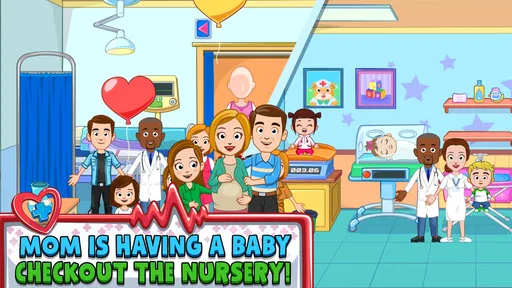
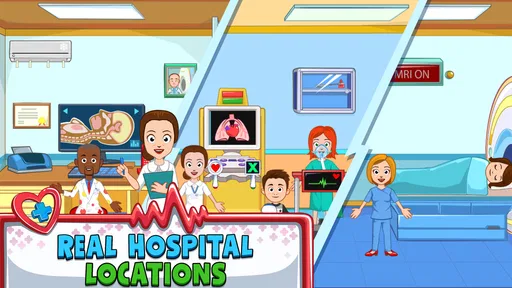
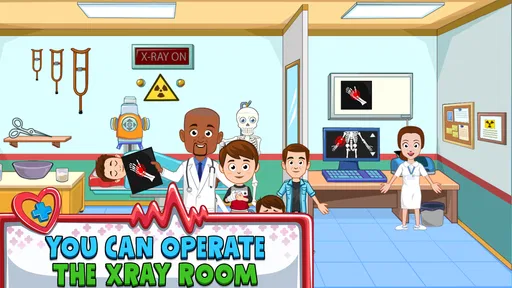
Players can explore several hospital areas, create or select characters, and use objects to build their own stories. Depending on the available version, activities may include visiting examination rooms, caring for patients, using medical equipment, welcoming babies, and acting out roles such as doctor, nurse, patient, or family member. The experience is intentionally flexible, so the main appeal comes from creativity rather than completing missions.
Play our best games!


